Hey fellow audio enthusiasts! Have you ever listened to a track and just felt that *warmth*, that incredible depth that digital sometimes struggles to capture?
I know I have. There’s something undeniably magical about the way analog audio filters can sculpt sound, adding a character and a soul that’s almost tangible.
In an era dominated by plugins and pristine digital precision, it might seem counterintuitive, but the world of analog processing is experiencing a magnificent resurgence, and for good reason.
From boutique guitar pedals to high-end studio consoles, the classic, hands-on feel of twisting a physical knob and hearing the immediate, organic response is an experience unlike any other.
It’s not just nostalgia; it’s a commitment to a richer, more vibrant sonic landscape that many of us, myself included, truly cherish. Whether you’re a seasoned producer yearning for that vintage vibe or a curious newcomer eager to explore sound in a deeper, more tactile way, understanding these timeless tools is crucial.
I’ve personally spent countless hours experimenting with different filters, marveling at how a simple cutoff or resonance tweak can utterly transform a sound from bland to absolutely breathtaking.
It’s a journey of discovery, and trust me, it’s worth every second. So, if you’re ready to dive headfirst into the fascinating world of analog audio filters – how they work, why they still matter today, and how you can integrate their unique magic into your own creative process – let’s explore it together right here.
Unlocking the Soul of Sound: What Makes Analog Filters So Special?

The Undeniable Warmth and Character
Let’s be real, there’s just something inherently *satisfying* about the sound that comes from analog circuits. It’s not just about filtering out frequencies; it’s about what the process itself *adds* to your sound.
When I first started messing around with a vintage filter pedal, I was blown away by the subtle, yet profound, difference it made. Digital filters can be surgically precise, which is great for some tasks, but analog… analog has a soul.
It imparts a certain warmth, a gentle saturation that breathes life into even the most sterile digital signals. I’ve found that even with a modest setup, routing a synth pad or a drum loop through a quality analog filter can instantly elevate it, giving it that elusive “expensive” sound.
It’s almost like the sound waves are being lovingly hand-sculpted, gaining a rich harmonic content that simply feels more organic and three-dimensional.
That subtle grit, the way the low-end thickens just so, or the high-end gets a silky sheen – these are the nuances that make me keep coming back for more.
It’s an experience that truly connects you to the sound in a way that just clicking a mouse on a plugin can’t quite replicate.
Beyond Digital Precision: The Beauty of Imperfection
We live in an age where digital audio can be perfectly replicated, perfectly clean, and perfectly precise. And sometimes, that’s exactly what we need!
But I’ve personally discovered that true sonic beauty often lies in the imperfections. Analog filters, by their very nature, introduce subtle non-linearities and beautiful aberrations.
These aren’t flaws; they’re features! Think of a classic vinyl record – that slight crackle, the subtle compression. It’s not “perfect” in a clinical sense, but it adds character and nostalgia.
Similarly, the way an analog filter reacts to different input levels, the way its resonance can sweeten or get wonderfully aggressive, or even the slight component tolerances that make each unit unique, all contribute to a rich, evolving soundscape.
I remember spending an entire afternoon just feeding different sounds into an old Korg MS-20 filter, just to hear how its distinct character would subtly warp and color everything.
It wasn’t about achieving a sterile ideal; it was about embracing the gorgeous, unpredictable nature of electrons flowing through physical components.
This “beauty of imperfection” is what allows analog filters to carve out unique textures that can make your tracks stand out from the crowd.
The Core Components: How These Sonic Sculptors Actually Work
Resistors, Capacitors, and Inductors, Oh My!
Alright, let’s get a tiny bit technical, but in a totally approachable way. At the heart of most analog filters, you’ll find a combination of passive components: resistors, capacitors, and sometimes inductors.
These aren’t just random bits of electronics; they’re the silent architects of your sound. Without getting bogged down in complex physics, think of it this way: resistors resist the flow of current, capacitors store and release electrical energy, and inductors create magnetic fields that oppose changes in current.
When you combine these in specific arrangements, they start to interact with different frequencies of an audio signal in distinct ways. For instance, a capacitor might allow high frequencies to pass through easily while blocking lows, or vice-versa.
It’s this delicate dance between these components that allows an analog filter to “decide” which frequencies get attenuated (turned down) and which get emphasized (boosted).
I recall one of my first DIY synth projects, trying to wire up a simple low-pass filter. Even then, hearing the raw sound transform just by adding a few carefully chosen components was a genuinely awe-inspiring moment.
It made me appreciate the genius behind these seemingly simple circuits.
The Magic of Resonance and Cutoff
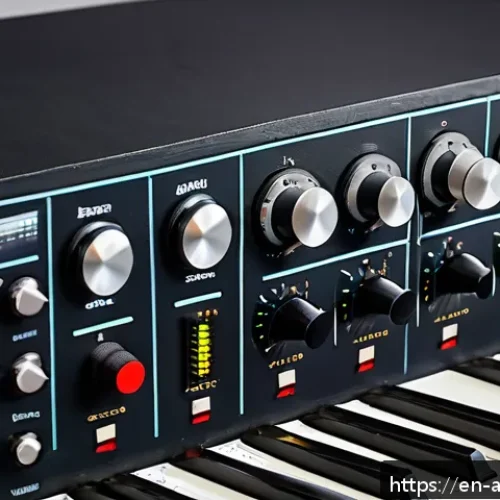
If you’ve ever played with an analog synth or a filter pedal, you’ve almost certainly encountered the “cutoff” and “resonance” knobs. These aren’t just arbitrary controls; they’re the heartbeat of many analog filters.
The “cutoff frequency” essentially dictates the point at which the filter starts to do its work. For a low-pass filter, turning the cutoff knob sweeps that point higher or lower, allowing more or fewer high frequencies to pass through.
It’s like drawing a line in the sand for your sound. But then there’s “resonance,” and oh, that’s where the real magic happens for me! Resonance, or “Q,” boosts frequencies right around the cutoff point.
Crank it up, and you’ll hear a distinct, often vocal-like peak at the edge of the filter’s effect. It can go from a subtle sweetening to a wild, self-oscillating scream, turning your filter into a sound source itself!
I’ve spent countless hours just sweeping the cutoff with high resonance on a bassline, creating those iconic “wah” and “squelch” effects that defined so much electronic music.
It’s incredibly intuitive and tactile – you feel the sound changing as your fingers twist the knobs, a direct connection to the sonic transformation.
Beyond the Basics: Diving into Different Filter Flavors
Low-Pass, High-Pass, and Band-Pass: Your Sonic Toolkit
Once you get a handle on cutoff and resonance, it’s time to explore the main types of filters you’ll encounter. The big three are Low-Pass, High-Pass, and Band-Pass.
A Low-Pass Filter (LPF) is probably the most common and it does exactly what it says: it lets low frequencies pass through while cutting off high frequencies.
This is your go-to for making sounds warmer, darker, or for removing harsh high-end. I use LPFs constantly to tuck elements into the background of a mix or to sculpt a deep, rumbling bass.
Then there’s the High-Pass Filter (HPF), which does the opposite, allowing high frequencies to pass and cutting off the lows. This is fantastic for cleaning up muddy mixes, removing unwanted rumble from a vocal track, or giving a sound a lighter, airier feel.
And finally, the Band-Pass Filter (BPF) is like combining an LPF and an HPF, creating a “window” of frequencies that are allowed through, cutting off both highs and lows.
This can create those classic “telephone” or “radio” effects, or help a specific element like a snare drum pop out of a dense mix by isolating its most important frequency range.
Each type has its own personality and its own ideal applications, and understanding them is crucial for effective sound design.
Notch, Shelving, and Beyond: Specialized Shaping
Beyond the fundamental three, there are a few other specialized filter types that are incredibly useful in specific scenarios. A Notch Filter, for example, is designed to cut out a very narrow band of frequencies, leaving everything else untouched.
I’ve found this invaluable for precisely removing a problematic hum or a resonant frequency in a recording without affecting the overall tone of the track.
It’s like having a laser beam for frequency surgical removal! Then you have Shelving Filters, which aren’t about cutting off entirely but rather about boosting or attenuating everything above or below a certain frequency by a consistent amount.
Think of the bass and treble controls on your stereo – those are typically shelving filters. They provide a broad, gentle shaping that can add body to the low end or sparkle to the high end without drastically altering the character of the sound.
Exploring these less common types really opens up a whole new world of subtle sonic refinement.
| Filter Type | Primary Function | Common Application | Distinctive Characteristic |
|---|---|---|---|
| Low-Pass Filter (LPF) | Allows frequencies below cutoff to pass. | Warming up sounds, removing harsh highs, creating depth. | Darkens sound, smooths top end. |
| High-Pass Filter (HPF) | Allows frequencies above cutoff to pass. | Cleaning up mud, removing rumble, creating airiness. | Thins out sound, removes low-end clutter. |
| Band-Pass Filter (BPF) | Allows a specific band of frequencies to pass. | Telephone effect, isolating specific instrument ranges, focused sweeps. | Emphasizes a narrow range, creates distinct “tunnel” sound. |
| Notch Filter | Attenuates a very narrow band of frequencies. | Removing hums, feedback, or specific problematic resonances. | Surgical removal of unwanted frequencies without broad impact. |
Bringing Vintage Vibe Home: Integrating Analog into Your Setup
From Pedals to Rack Units: Finding Your Perfect Match
So, you’re convinced analog filters are awesome (and why wouldn’t you be?!), but how do you actually get them into your studio or live rig? The good news is, there are options for almost every budget and workflow.
On the more accessible end, you’ll find a plethora of guitar pedals that incorporate fantastic analog filters. Many synth players and producers, myself included, have discovered that a well-chosen guitar pedal can add incredible character to synths, drums, and even vocals.
They’re often rugged, relatively inexpensive, and packed with personality. Then there are dedicated desktop units, often designed for electronic musicians, which offer more hands-on control and sometimes additional features like sequencers or modulation options.
Moving up, you get into rackmount units – these are typically studio-grade, offering pristine audio quality and professional connectivity, perfect for mixing and mastering or for those who want a permanent, high-end solution.
I started with a cheap second-hand guitar pedal, and the joy of twisting those knobs was infectious. It taught me so much before I even considered investing in more expensive gear.
The key is to find what fits your needs and your budget, and don’t be afraid to experiment!
Workflow Wonders: Seamlessly Blending Analog and Digital
One of the biggest misconceptions I hear is that if you go analog, you have to abandon digital. Absolutely not! The real magic happens when you figure out how to seamlessly blend the best of both worlds.
For me, that often means using my analog filters as “hardware inserts” in my Digital Audio Workstation (DAW). This allows me to send a track out from my computer, process it through the physical analog filter, and then bring it back into the DAW as a new, flavored audio track.
It’s like having a dedicated sonic chef for each sound! Another fantastic approach is re-amping: recording a clean signal (like a synth line or a bass guitar) and then sending it back out through an analog filter (and maybe some other gear) to shape and record the filtered sound separately.
This gives you incredible flexibility to experiment with different filter settings without committing to a sound during the initial recording. It’s a slightly more involved process, but the results are often so rewarding, adding a depth and realism that’s hard to achieve any other way.
Embrace the hybrid workflow; it’s where the most exciting sound design often happens.
Common Pitfalls and How to Master Your Analog Filter

Avoiding Mud and Harshness: The Art of Subtlety
As much as I adore analog filters, it’s easy to overdo it, especially when you’re first starting out. I’ve definitely been guilty of cranking the resonance to oblivion, only to realize my mix sounded like a screeching mess!
One of the biggest pitfalls is introducing too much low-end mud or excessive harshness in the high frequencies. Analog filters can be powerful, and with that power comes the responsibility to use them subtly.
Don’t just sweep the cutoff wildly; listen intently to what’s happening. Often, a tiny tweak of the cutoff or resonance can make a huge difference. If you’re using a low-pass filter to warm things up, pay attention to how much low-mid buildup you’re getting.
If it starts to sound cloudy, back off a bit or add a gentle high-pass filter before or after your analog unit to clean up the extreme lows. The goal isn’t to obliterate frequencies; it’s to sculpt and enhance.
Learning the art of subtlety took me time, but it’s where truly professional-sounding results come from. Your ears are your best guide, so trust them.
Understanding Interaction: Every Knob Matters
Another thing I learned the hard way is that on many analog filters, especially older ones, the controls aren’t always perfectly isolated. What you do with the input gain might affect how the cutoff behaves, or how much resonance you can get before it self-oscillates.
It’s not like a sterile digital plugin where everything is perfectly predictable. This is part of their charm, but also something to be aware of. When I first got my hands on a truly vintage filter, I expected each knob to do one specific thing, but found that tweaking one parameter subtly influenced the others.
This meant I had to develop a more holistic approach to dialing in sounds. Instead of just setting the cutoff and then setting the resonance, I learned to sweep them together, listening to the interplay.
It’s a dance between the controls, and understanding this interaction is key to unlocking the full potential and unique voice of your particular filter.
Don’t be afraid to just turn knobs and listen, even if you don’t have a specific goal in mind – that’s often how the most exciting discoveries are made!
The Resurgence: Why Analog is More Relevant Than Ever
The Human Touch in a Digital World
You might wonder, in an age of incredibly powerful digital plugins and software synths, why are people flocking back to analog filters? I believe it boils down to the human element.
There’s a tangible, physical connection you get when you’re interacting with a piece of analog gear that simply isn’t present when you’re clicking and dragging on a screen.
The weight of the knobs, the slight friction as you turn them, the immediate sonic response – it all contributes to a more engaging and inspiring creative process.
For me, stepping away from the computer screen and twisting real knobs helps break me out of creative ruts. It encourages me to listen more deeply and to experiment more freely.
It’s not just about the sound; it’s about the experience, the ritual of it all. In a world increasingly dominated by digital interfaces, the tactile, responsive nature of analog filters offers a refreshing antidote, reminding us that music creation can be a profoundly physical and sensory experience.
Creative Inspiration and Workflow Enhancement
Beyond the tactile satisfaction, analog filters can be massive catalysts for creative inspiration and can genuinely enhance your workflow. Think about it: when you’re presented with a physical box and a limited set of controls, it often pushes you to explore within those constraints, leading to unexpected and unique results.
I’ve found that using an analog filter encourages me to commit to sounds earlier in the process, which paradoxically speeds up my workflow. Instead of endlessly tweaking parameters in a plugin, I’ll dial in a sound on my hardware, record it, and move on.
That commitment often leads to a more focused and intentional approach to mixing and arrangement. Plus, the inherent character and imperfections of analog gear often spark new ideas that purely digital tools might not.
A gnarly resonant sweep or a slightly distorted texture from an analog filter can be the very spark that turns a bland track into something truly captivating.
It’s not just a tool; it’s a creative partner.
Crafting Your Signature Sound: Advanced Techniques with Analog
Exploring Modulation and Self-Oscillation
Once you’ve got a handle on the basics, the true fun begins when you start exploring the more advanced capabilities of analog filters. One of my absolute favorite things to do is modulate the cutoff frequency with an external LFO (Low-Frequency Oscillator) or an envelope follower.
This is where filters truly come alive, creating rhythmic pulsing, evolving textures, or expressive wah-like effects. Imagine a subtle, slow sweep on a pad to add movement, or a fast, rhythmic chop on a lead synth to create aggressive stabs.
And then there’s self-oscillation – a magical phenomenon where, with enough resonance, a filter can generate its own sine wave tone at the cutoff frequency, even without any input signal!
This opens up a whole world of sound design, allowing you to use your filter as a unique synthesizer voice for drones, percussion, or sci-fi effects. I’ve personally spent hours just playing around with a self-oscillating filter, using it to create ambient soundscapes or glitchy percussive elements, discovering entirely new sonic possibilities from what initially seemed like a simple processing tool.
It truly stretches the definition of what a filter can be.
Serial vs. Parallel Processing: Expanding Your Sonic Palette
Beyond just tweaking individual settings, how you route your analog filter within your signal chain can dramatically expand your sonic palette. Two common approaches are serial and parallel processing.
In a serial setup, your entire signal goes *through* the filter, meaning the filter affects 100% of the sound. This is great for fundamentally changing the character of a track, like giving a synth an entirely new timbre.
However, sometimes you want the character of the filter without losing the punch or clarity of the original signal. That’s where parallel processing comes in.
Here, you split your signal, sending one dry (unfiltered) version and one wet (filtered) version to your mixer or DAW. Then, you blend the two together.
This allows you to add that analog warmth, resonance, or grit without completely washing out the original sound. I often use parallel filtering on drums – sending a copy of the drum bus through a heavily resonant filter, then blending just a touch of that filtered signal back into the main dry mix.
It adds incredible punch and presence without making the drums sound overly processed or thin. Experimenting with these routing techniques can unlock a whole new dimension of creative control and allows you to use your analog filters in incredibly versatile ways.
Wrapping Things Up
And there you have it, folks! We’ve journeyed deep into the heart of what makes analog filters so captivating. It’s truly more than just a piece of gear; it’s an experience, a connection to the very essence of sound. From that undeniable warmth and character that breathes life into sterile signals, to the beautiful imperfections that digital precision often misses, analog filters offer a unique pathway to sonic artistry. For me, the joy isn’t just in the sound they produce, but in the tactile act of twisting a knob and hearing an immediate, organic response. It’s a reminder that sometimes, the most profound creative moments happen when we step away from the screen and engage with something real, something that responds with its own distinct voice.
So, whether you’re a seasoned producer or just starting your sonic exploration, I truly encourage you to give analog filters a spin. They might just be the secret ingredient your tracks have been longing for, adding that elusive depth, saturation, and harmonic richness that can truly elevate your music. Don’t be afraid to experiment, to break the rules, and to let your ears guide you. The world of analog is vast and rewarding, and I promise, once you dive in, you’ll discover a whole new realm of creative possibilities that will keep you coming back for more.
Useful Tips and Insights
1. Start Small, Dream Big: You don’t need to break the bank to experience analog magic. Many fantastic and affordable filter pedals exist from brands like Electro-Harmonix or Behringer that offer incredible character for synths, drums, and even vocals. They’re a perfect entry point before considering high-end rack units.
2. Trust Your Ears Above All Else: Technical specifications are one thing, but how a filter *sounds* and *feels* in your music is paramount. Don’t chase perfect numbers; chase the feeling. Often, the most subtle tweaks make the biggest difference, so listen intently and let your artistic intuition guide your hand.
3. Embrace the Hybrid Workflow: Don’t feel you have to choose between analog and digital. The most powerful studios combine the best of both worlds. Use hardware inserts in your DAW to route tracks through physical filters, or re-amp recorded sounds for ultimate flexibility and a seamless blend of pristine digital and characterful analog.
4. Experiment with Signal Chains: The order in which you place your analog filter within your effects chain can dramatically alter its sound. Try it before or after a compressor, distortion, or reverb. Also, don’t shy away from parallel processing—sending a dry signal alongside a heavily filtered one can add immense depth and punch.
5. Explore Modulation and Self-Oscillation: Beyond simple cutoff sweeps, delve into using LFOs or envelope followers to modulate your filter’s parameters for dynamic, evolving textures. Pushing the resonance to self-oscillation can turn your filter into a unique sound source itself, perfect for drones, sci-fi effects, or distinctive percussive elements.
Key Takeaways
Ultimately, analog filters are more than just tools for frequency shaping; they are instruments of expression that imbue your sound with unique character and warmth. Their inherent imperfections and non-linearities contribute to a “soul” that is often absent in purely digital processing, fostering a more engaging and inspiring creative workflow. By understanding the core components, experimenting with different filter types, and embracing both tactile interaction and hybrid setups, you can unlock a truly distinctive sonic palette. Remember to wield their power with subtlety, trust your ears, and recognize that mastery comes from continuous exploration and a deep appreciation for the artistry woven into their circuits. They’re not just about *what* you filter out, but *what* they add to your sound, making your music truly stand out in a digital landscape.
Frequently Asked Questions (FAQ) 📖
Q: uestions
A: bout Analog Audio Filters
Q: What exactly are analog audio filters, and what’s driving their massive comeback in today’s digital music world?
A: Alright, let’s get down to basics! An analog audio filter is essentially an electronic circuit that shapes the sound of an audio signal by selectively allowing certain frequencies to pass through while attenuating or blocking others.
Think of it like a finely tuned sculptor for your sound, using physical components like resistors, capacitors, and inductors to manipulate the audio in a continuous, physical way.
These filters are fundamental in audio processing, from separating signals for different speakers to reducing unwanted noise. Now, why the huge comeback?
It’s all about that mojo, that intangible warmth and musicality that digital often struggles to replicate. Analog filters introduce subtle imperfections and non-linear behaviors into the sound, which can add a rich, desirable character.
Digital, while incredibly precise, can sometimes feel a bit too sterile. Many of us, myself included, chase that “vintage vibe” you hear on classic records.
Analog filters, especially those in iconic gear like old Moog synthesizers or vintage EQs, just have a soul. Plus, there’s a real joy in the tactile experience of tweaking physical knobs and hearing the immediate, organic response.
It’s not just nostalgia; it’s a genuine desire for a richer, more vibrant sonic landscape in a world that often leans heavily on pristine digital precision.
There’s even a growing trend of built-in analog filters in modern audio interfaces, allowing you to capture that character right at the source!
Q: How do analog filters actually shape sound differently compared to their digital plugin counterparts? Is it really that big of a deal?
A: Oh, it’s absolutely a big deal, and once you hear it, you often can’t unhear it! The core difference lies in their fundamental nature. Analog filters operate on a continuous, physical electrical signal, using those physical components we talked about.
This means the way they interact with the sound is inherently fluid and organic. Digital filters, on the other hand, process discrete, sampled data. The analog signal is converted into numbers, the numbers are processed by algorithms, and then, if needed, converted back to analog.
My own experience, and what many audio pros will tell you, is that analog filters tend to have a “smoother” resonance and a more “musical” response. When you crank up the resonance on an analog filter, it can truly squeal in a way that’s incredibly expressive and often difficult for digital emulations to perfectly replicate.
This is partly due to the subtle non-linearities and harmonic distortions that are a natural part of analog circuits. These are happy accidents, if you will, that add depth and richness.
Digital filters, while offering immense precision and flexibility (you can do things digitally that are impossible with analog circuits, like complex morphing filters!), can sometimes struggle with high excitation at high resonance, potentially introducing artifacts or just not having that same “electrical noise” character.
It’s not about one being definitively “better,” but about the character they impart. If you’re going for surgical precision and infinite recall, digital is your friend.
But if you want that organic, breathing, slightly unpredictable sonic magic, analog often has an edge. I’ve found that even the best digital emulations often get close, but there’s a certain “je ne sais quoi” in hardware that just hits different.
Q: I’m interested in getting into analog filtering. What are some practical ways to integrate them into a modern production workflow, and what should I look for when I’m ready to buy?
A: That’s awesome! Integrating analog filters can seriously elevate your sound. Here’s how I approach it and what I’d recommend looking for.
For workflow, you don’t necessarily need a whole studio full of vintage gear. Even one or two choice analog pieces can make a huge difference. Tracking with Character: If you have an analog filter that you really love, try running your sound through it while recording.
This could be a synth, a guitar, or even vocals. Sculpting the sound at the source saves a lot of work later and often captures a more organic performance.
Some newer audio interfaces even have built-in analog filters for this very reason! Creative Sound Design: Use an analog filter on an insert or as a send effect.
Automate the cutoff and resonance to create those classic sweeping effects in electronic music or to add dynamic movement to pads and textures. I often find that an analog filter sweep just has a more pleasing, less “digital” curve to it, especially when it gets aggressive.
Buss Processing: Sometimes, running an entire drum buss or even your master buss through a subtle analog filter can add a beautiful glue and sheen that’s hard to achieve otherwise.
Just be gentle here – a little goes a long way. When you’re ready to buy, here’s what I’d keep in mind:Filter Type: Do you want a classic low-pass, a versatile multi-mode (low-pass, high-pass, band-pass), or something more unique like a formant filter?
Different designs, like the smooth Moog ladder filter or the more aggressive Roland TB-303 diode ladder, have distinct sounds. Think about the sounds you love and research what kind of filters were used to create them.
Resonance (Q): This is crucial! How does it sound when you push the resonance? Does it have that creamy, musical quality, or does it scream in an exciting way?
This is often a defining characteristic of an analog filter. Controls & Modulation: Do you prefer hands-on knobs, or do you need CV inputs for external modulation from your synths or modular rig?
Some filters offer LFOs or envelope followers for built-in modulation, which is fantastic for dynamic effects. Active vs. Passive: Active filters use active components like op-amps and can offer gain and easier design, while passive filters use just resistors, capacitors, and inductors.
Both have their place, but active designs are often more common and flexible for audio applications. Budget & Format: Analog filters come in all shapes and sizes, from affordable guitar pedals to higher-end Eurorack modules, 500-series units, or full rackmount processors.
Consider your existing setup and how you want to integrate it. While plugins have gotten incredibly good, many people, myself included, find dedicated hardware provides a unique sonic and tactile experience.
Don’t be afraid to experiment, and trust your ears! That’s the biggest tip I can give you. Happy filtering!