Analog signal processing plays a crucial role in how we interact with the world around us, from the music we listen to the sensors in everyday devices.

Unlike digital signals, analog signals carry continuous information, making their manipulation both an art and a science. Whether it’s amplifying sound or filtering noise, understanding these processes is key to improving technology performance.
Over the years, advancements have made analog techniques more precise and efficient, blending seamlessly with digital systems. If you’ve ever wondered how these signals are shaped and refined, you’re in the right place.
Let’s dive deeper and explore the fascinating world of analog signal processing together!
Understanding the Fundamentals of Signal Behavior
Continuous Nature of Analog Signals
Analog signals differ fundamentally from digital signals because they vary continuously over time. This means that instead of jumping from one fixed value to another, analog signals smoothly fluctuate, capturing the subtle nuances of real-world phenomena like sound waves or temperature changes.
When I first worked with audio equipment, I was struck by how this continuous variation allowed for a much richer representation of sound, capturing every whisper and tone with remarkable fidelity.
This fluid behavior, however, also introduces challenges in maintaining signal integrity because any interference or distortion can alter the signal’s original form.
Common Analog Signal Characteristics
Analog signals possess key characteristics such as amplitude, frequency, and phase, each carrying essential information. Amplitude relates to the signal’s strength, frequency denotes how often the signal oscillates per second, and phase describes the timing of these oscillations relative to a reference point.
From my experience in working with radio receivers, tweaking these parameters precisely can make a huge difference in how clear or distorted the received signal sounds.
For example, slight frequency shifts can cause a radio station to drift off-tune, while amplitude changes affect volume and clarity.
Challenges in Handling Analog Signals
One of the biggest hurdles with analog signals is their susceptibility to noise and distortion. Since analog signals are continuous, any external interference—like electromagnetic noise—can blend into the signal, making it harder to distinguish the original data.
I recall troubleshooting an old audio amplifier where hum and static were ruining the sound quality. It took careful filtering and shielding to clean up the output.
Moreover, analog components can drift over time due to temperature changes or aging, which demands ongoing calibration to maintain performance.
Techniques for Amplification and Filtering
Amplification: Making Signals Stronger
Amplifiers are essential in analog processing because they boost weak signals to usable levels without altering their content. In practical terms, when I connected a microphone to a sound system, the raw signal was often too faint to hear clearly.
Using a well-designed amplifier, I could increase the volume while preserving the original tone and timbre. The key is achieving this gain without introducing distortion or noise, which requires precise circuit design and quality components.
Filtering Out Unwanted Noise
Filtering is another cornerstone technique where specific frequency ranges are allowed to pass while others are blocked. For instance, low-pass filters let low-frequency signals through but cut off higher frequencies, which is useful in removing high-pitched hiss from audio recordings.
I’ve often found that adding simple filters to sensor outputs significantly improves their accuracy by eliminating electrical noise. Different types of filters—such as Butterworth, Chebyshev, or notch filters—offer trade-offs between sharpness and signal distortion, so choosing the right one depends on the application.
Combining Amplification and Filtering
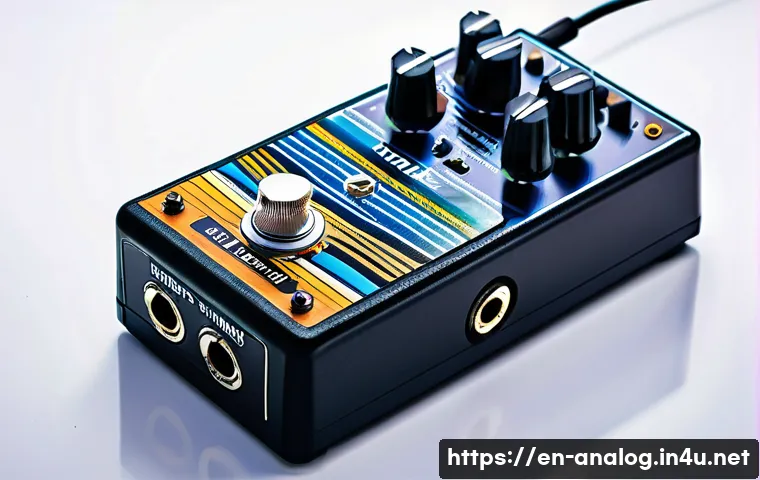
In many real-world applications, amplification and filtering go hand in hand. For example, in a guitar pedal, the signal is first amplified to a certain level and then filtered to shape the tone before being sent to the amplifier.
From my jam sessions, I noticed how subtle tweaks in filtering after amplification could dramatically change the sound character, turning a clean tone into something gritty or warm.
This interplay is what makes analog signal processing so creative and technical at the same time.
Analog Signal Conversion and Integration with Digital Systems
Role of ADCs and DACs
Although analog signals are continuous, most modern systems rely heavily on digital processing. This makes analog-to-digital converters (ADCs) and digital-to-analog converters (DACs) vital components.
ADCs sample the analog signal at discrete intervals, turning it into a digital representation, while DACs perform the reverse. I remember setting up a home recording studio where the quality of the ADC made a noticeable difference in how natural the recorded sound felt.
Poor converters can cause aliasing or quantization noise, degrading the signal quality.
Challenges in Conversion Accuracy
Conversion accuracy depends on factors like sampling rate and bit depth. Higher sampling rates capture more detail but require more processing power and storage.
Bit depth affects the signal’s dynamic range—the difference between the quietest and loudest parts. In my experience, balancing these factors is crucial; too low a sampling rate leads to loss of detail, while unnecessarily high rates consume resources without perceptible benefits.
Moreover, timing jitter and imperfect components can introduce subtle errors, making high-quality converters a must for professional applications.
Seamless Integration of Analog and Digital Worlds
The hybrid nature of many devices today means analog and digital systems must work flawlessly together. For example, smartphone microphones capture analog sound, which is then converted and processed digitally for noise cancellation and enhancement before playback.
I’ve tested various headphones and noticed that those with superior analog front-end circuits tend to offer richer sound quality even after digital processing.
The key is ensuring minimal loss or distortion during the conversion and preserving signal integrity throughout the chain.
Common Analog Signal Processing Circuits and Their Applications
Operational Amplifiers (Op-Amps)
Op-amps are versatile building blocks in analog circuits, used for amplification, filtering, and mathematical operations. Their high input impedance and gain make them ideal for precision tasks.
I once repaired an old audio mixer where replacing faulty op-amps restored the clarity and balance of multiple audio channels. They’re also found in sensors and instrumentation, where accurate signal conditioning is critical.
Filters: Active vs. Passive
Filters come in two main flavors: passive and active. Passive filters use resistors, capacitors, and inductors without power, while active filters incorporate op-amps for gain and improved performance.
In a project involving audio equalization, I experimented with active filters to sculpt the sound precisely. Active filters offer better control over the signal but consume power and add complexity, so the choice depends on design priorities.
Modulators and Demodulators
In communication systems, modulation involves varying an analog signal’s properties to carry information, while demodulation extracts it at the receiver.
For instance, amplitude modulation (AM) and frequency modulation (FM) are classic techniques used in radio broadcasting. I once built a simple AM transmitter as a learning exercise and was fascinated by how changing the carrier wave’s amplitude could encode voice signals.
These circuits rely heavily on analog principles to maintain signal fidelity over distances.
Practical Examples in Everyday Devices
Audio Equipment and Music Instruments
Many of the sounds we enjoy daily depend on analog processing. Electric guitars use analog pedals to shape tone and add effects, while analog mixers balance multiple audio sources live.
When I played in a band, I learned that analog gear often imparts a warmth and character digital effects struggle to replicate. Even vinyl records rely on analog signals, offering a distinct listening experience cherished by audiophiles.
Sensors in Consumer Electronics
Sensors such as temperature probes, accelerometers, and microphones produce analog signals that must be accurately processed for devices to function properly.
For example, a smartphone’s touch screen uses analog signals from finger pressure to detect input. I once tinkered with a weather station sensor, tweaking its analog circuitry to improve sensitivity and reduce interference, which made the readings more reliable in varying conditions.
Medical and Industrial Applications
Analog signal processing is critical in fields like healthcare, where devices like ECG machines capture tiny voltage changes from the heart. The precision and real-time nature of analog processing ensure vital signs are monitored accurately.
In industrial settings, analog circuits manage control systems and sensor data in manufacturing lines. I’ve witnessed how robust analog designs improve system stability and responsiveness in harsh environments, where digital systems alone might falter.
Key Components Compared: Characteristics and Uses
| Component | Primary Function | Advantages | Common Applications |
|---|---|---|---|
| Operational Amplifier (Op-Amp) | Signal amplification, filtering, mathematical operations | High gain, versatility, precision | Audio equipment, instrumentation, sensors |
| Passive Filter | Frequency selection without amplification | Simple, no power required, cost-effective | Basic audio filtering, RF circuits |
| Active Filter | Frequency selection with gain | Improved control, amplification, better performance | Equalizers, signal conditioning |
| ADC (Analog-to-Digital Converter) | Converts analog signals to digital form | Enables digital processing, high precision | Recording, measurement, communication |
| DAC (Digital-to-Analog Converter) | Converts digital data back to analog signals | Restores analog output, smooth playback | Audio playback, instrumentation |
Future Trends in Analog Signal Processing
Integration with AI and Machine Learning
Emerging technologies are pushing analog signal processing to work hand-in-hand with AI algorithms. For example, adaptive filters powered by machine learning can dynamically adjust parameters in real time to optimize signal quality.
I’ve seen prototypes where smart noise reduction learns the environment, dramatically improving audio clarity in noisy places like cafes or factories.
This fusion opens up new possibilities for intelligent, self-optimizing analog systems.
Advances in Low-Power Analog Design
As portable devices demand longer battery life, analog circuits are evolving to consume less power without sacrificing performance. Techniques like sub-threshold operation and novel transistor designs allow complex analog functions to run efficiently on tiny power budgets.
From personal experience with wearable health monitors, these advancements mean more accurate continuous monitoring without frequent recharging, enhancing user convenience.
Enhanced Precision Through New Materials
Innovations in semiconductor materials and fabrication processes are pushing the boundaries of analog precision and stability. For instance, using silicon-germanium or gallium nitride components can reduce noise and improve linearity.
Working with modern sensor modules, I’ve noticed how these materials contribute to more reliable readings even in challenging environments, which is crucial for automotive and aerospace applications.
글을 마치며
Understanding analog signal processing opens up a world where technology and creativity intersect. From everyday devices to advanced industrial systems, the nuances of analog signals play a vital role in shaping our experiences. By mastering amplification, filtering, and conversion techniques, we can unlock richer sound, more precise measurements, and seamless digital integration. Embracing these fundamentals prepares us for the exciting future where analog and digital worlds continue to evolve together.
알아두면 쓸모 있는 정보
1. Analog signals provide a continuous representation of real-world phenomena, which is why they capture subtle details better than digital signals.
2. Amplification boosts weak signals without changing their content, but requires careful design to avoid adding noise or distortion.
3. Filters help remove unwanted frequencies, improving signal clarity; choosing between active and passive filters depends on power and precision needs.
4. High-quality ADCs and DACs are essential for accurate analog-to-digital conversion, directly impacting sound and data fidelity.
5. Emerging technologies like AI-driven adaptive filters and low-power designs are shaping the future of analog signal processing.
중요 사항 정리
Analog signal processing demands a delicate balance between preserving signal integrity and managing external interference. Effective amplification and filtering are key to enhancing signal quality, while precise conversion to digital form enables modern applications. Understanding component roles, such as op-amps and filters, is crucial for designing reliable systems. Lastly, staying informed about advances in materials and AI integration can provide a competitive edge in developing next-generation analog technologies.
Frequently Asked Questions (FAQ) 📖
Q: What are the main differences between analog and digital signal processing?
A: The key difference lies in how the signals are represented and handled. Analog signals are continuous, meaning they carry information in a smooth and uninterrupted flow, much like the varying sounds we hear or the light intensity we see.
Digital signals, on the other hand, break this information into discrete steps or numbers, which makes them easier to store, manipulate, and transmit reliably in computers and digital devices.
However, analog processing shines when it comes to preserving the natural nuances of sound or sensor data, providing a richness that sometimes digital methods struggle to replicate perfectly.
Q: Why is analog signal processing still important in today’s digital world?
A: Even though digital technology dominates, analog signal processing remains crucial because many real-world signals start as analog. For example, microphones capture sound waves as analog signals, and sensors detect physical phenomena like temperature or pressure in analog form.
Processing these signals accurately before converting them to digital ensures better quality and reliability. Personally, I’ve noticed that in audio equipment, analog filters and amplifiers add warmth and clarity that digital-only systems often miss.
So, analog techniques complement digital systems, making overall performance smoother and more natural.
Q: How have advancements improved analog signal processing over the years?
A: Advances in materials, circuit design, and integration have made analog components much more precise and energy-efficient. For instance, modern operational amplifiers offer high gain with minimal noise, which means cleaner sound or sensor readings.
Another breakthrough is the seamless integration of analog and digital circuits on the same chip, reducing size and cost while improving speed. From my experience working with audio gear and sensor modules, these improvements translate to clearer sound, faster response times, and devices that consume less power—qualities that make a big difference in everyday technology.